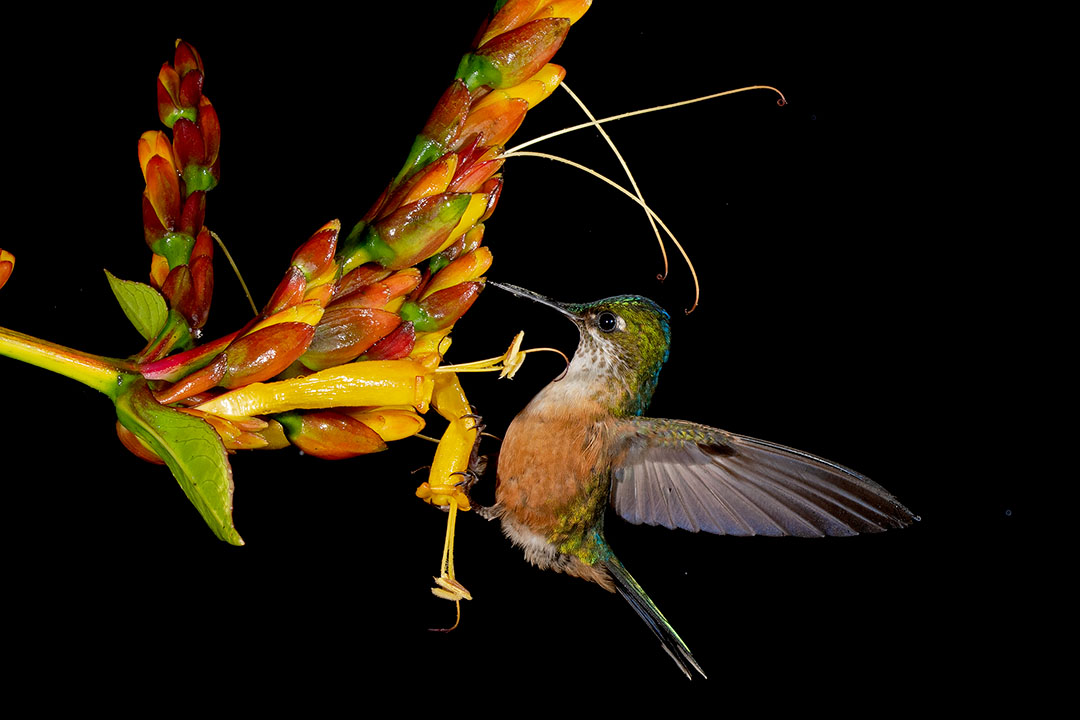
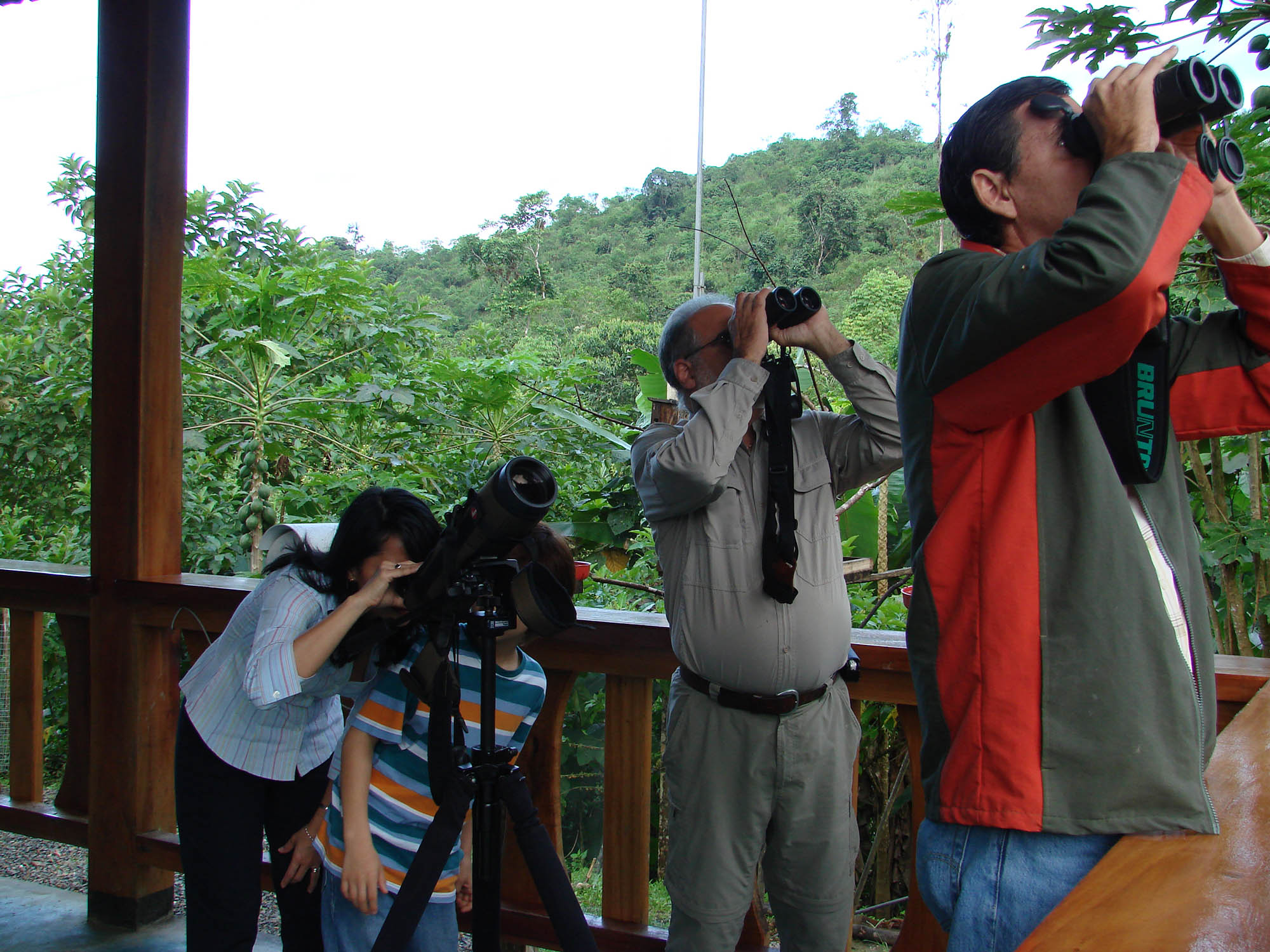
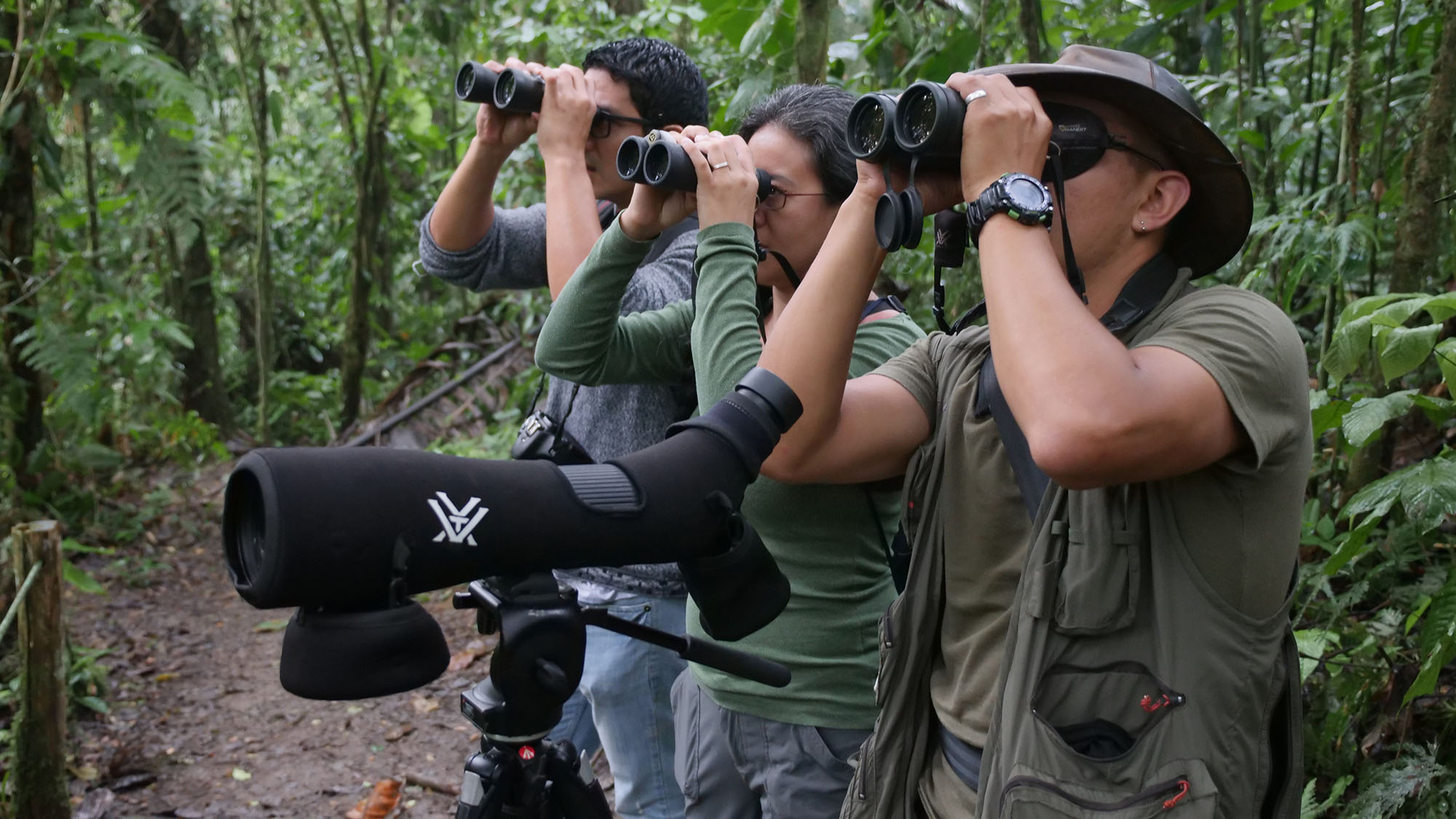
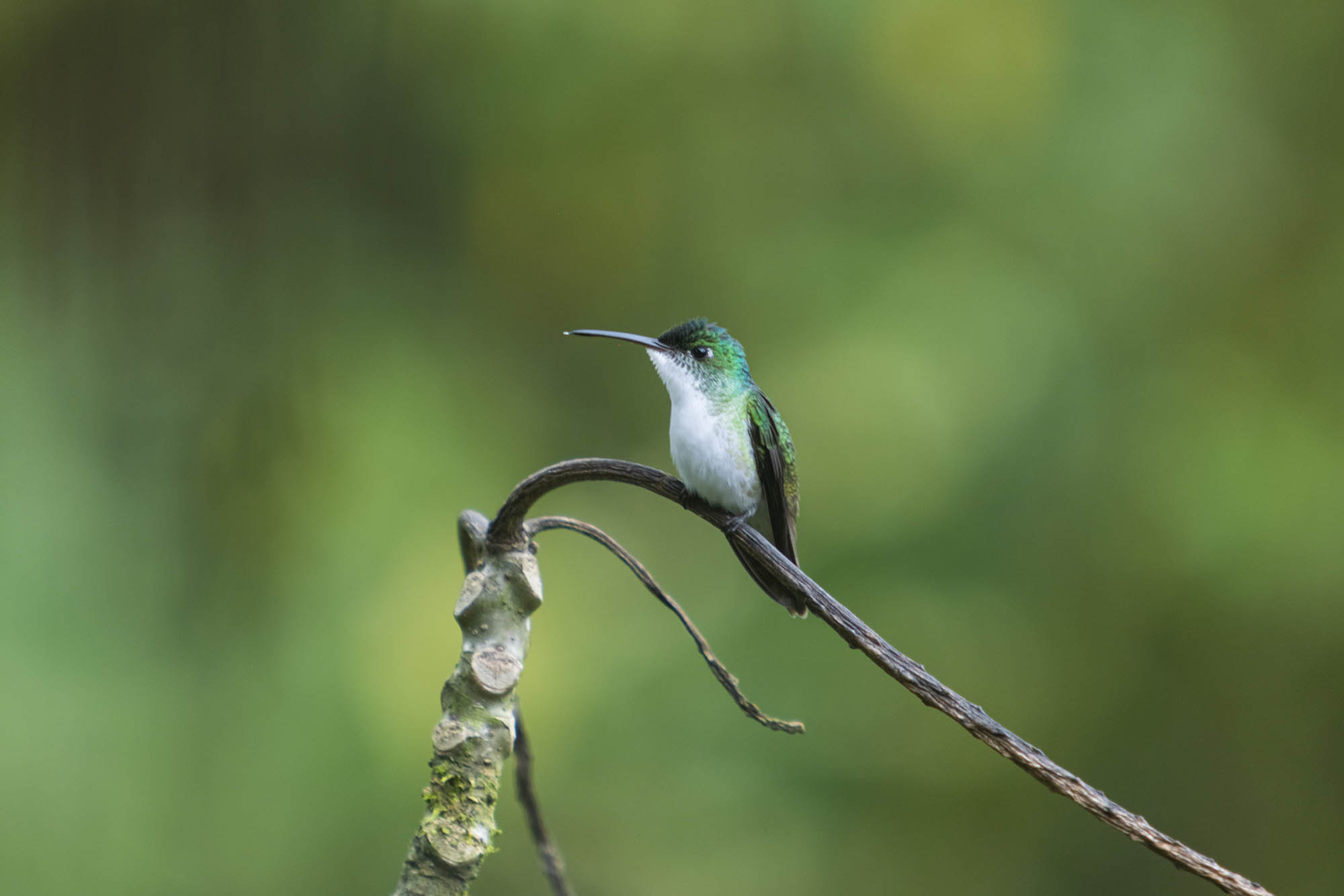
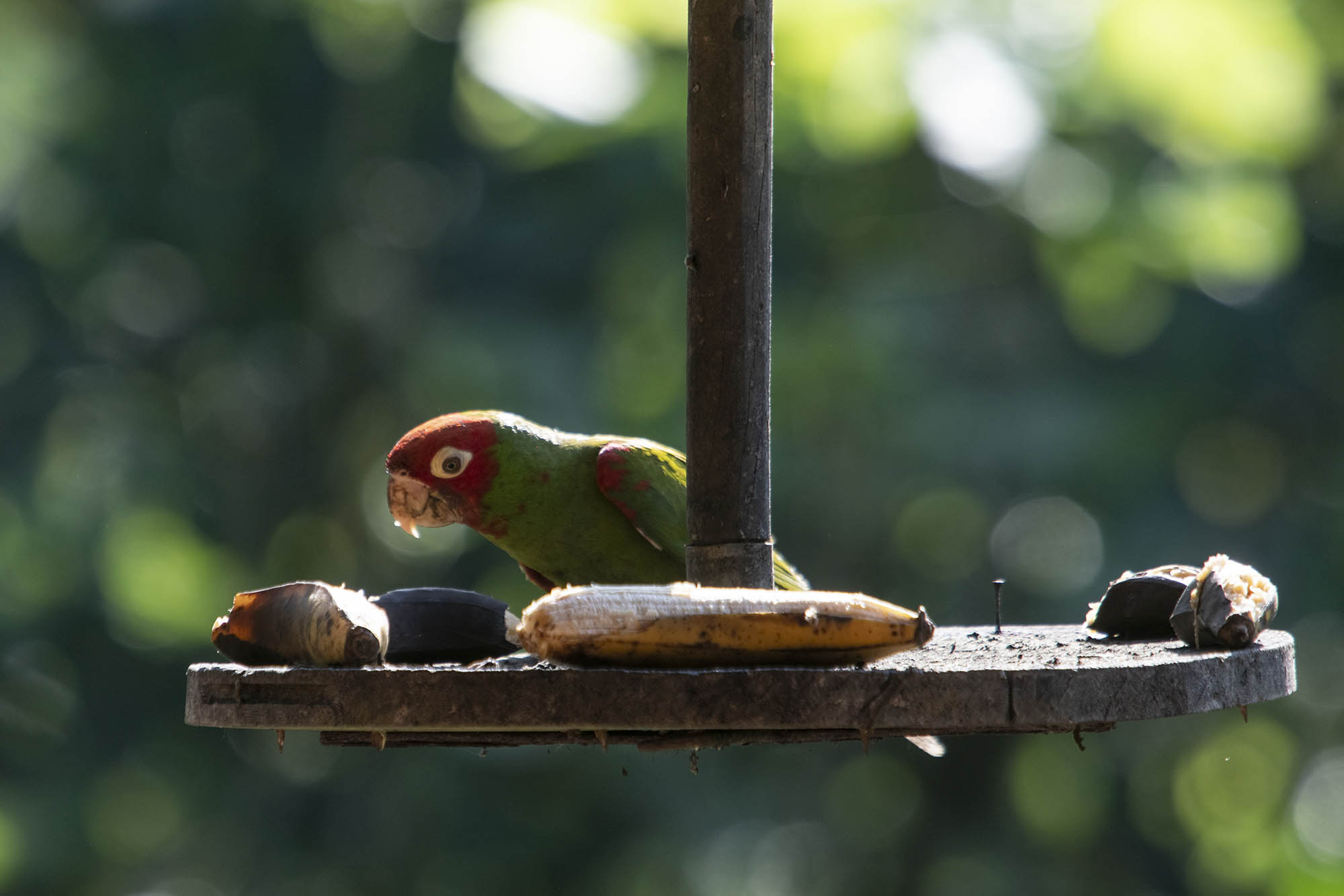
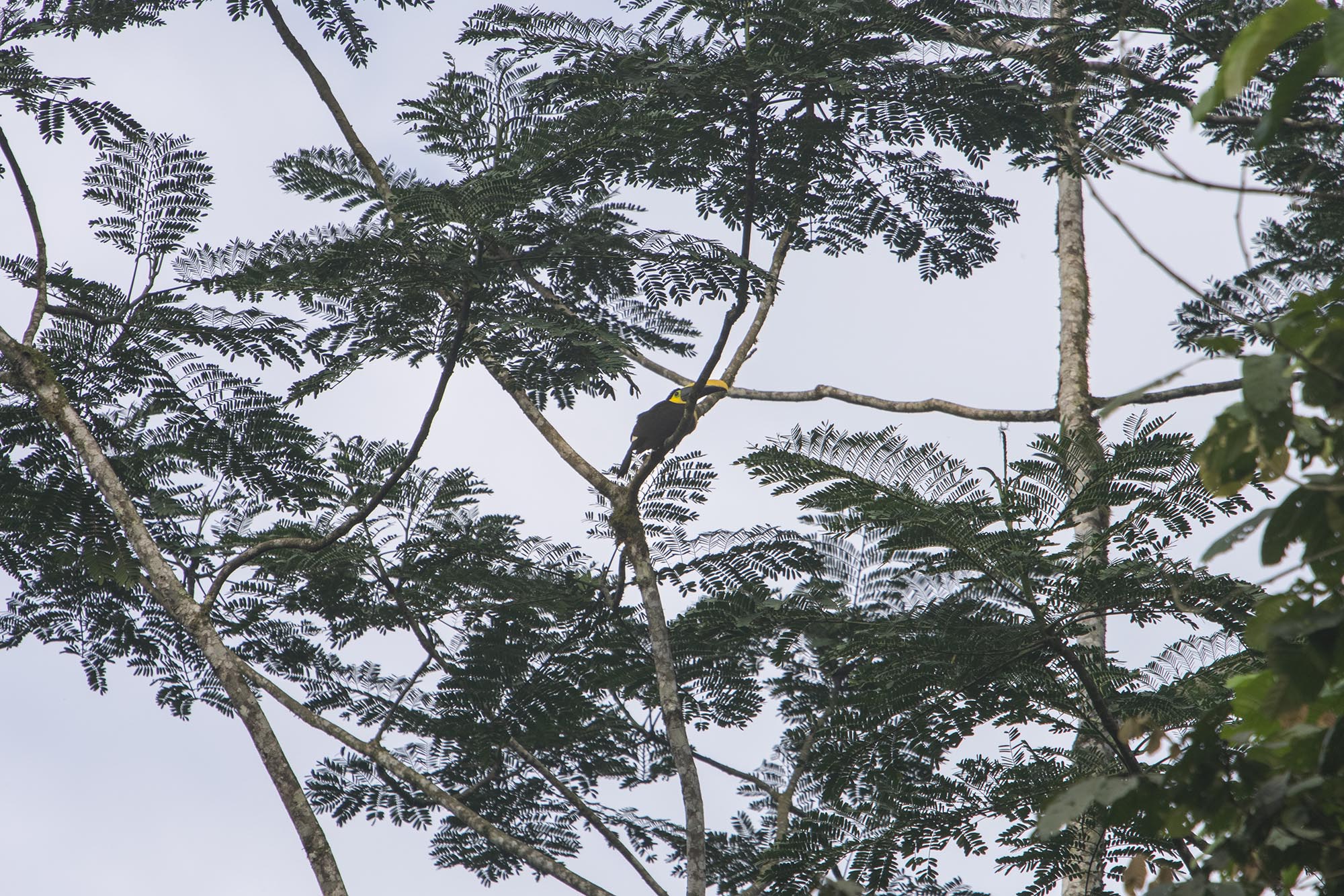
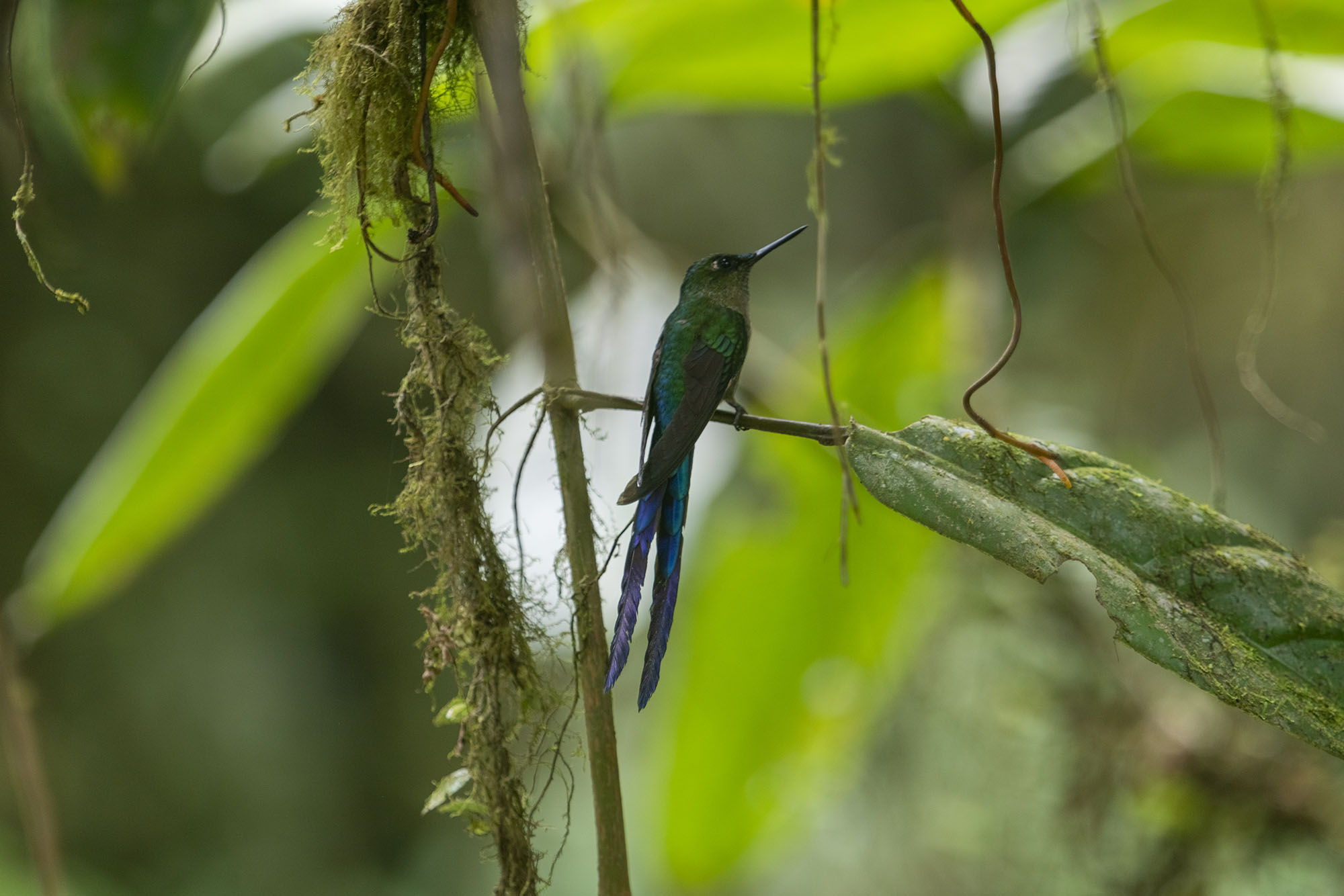
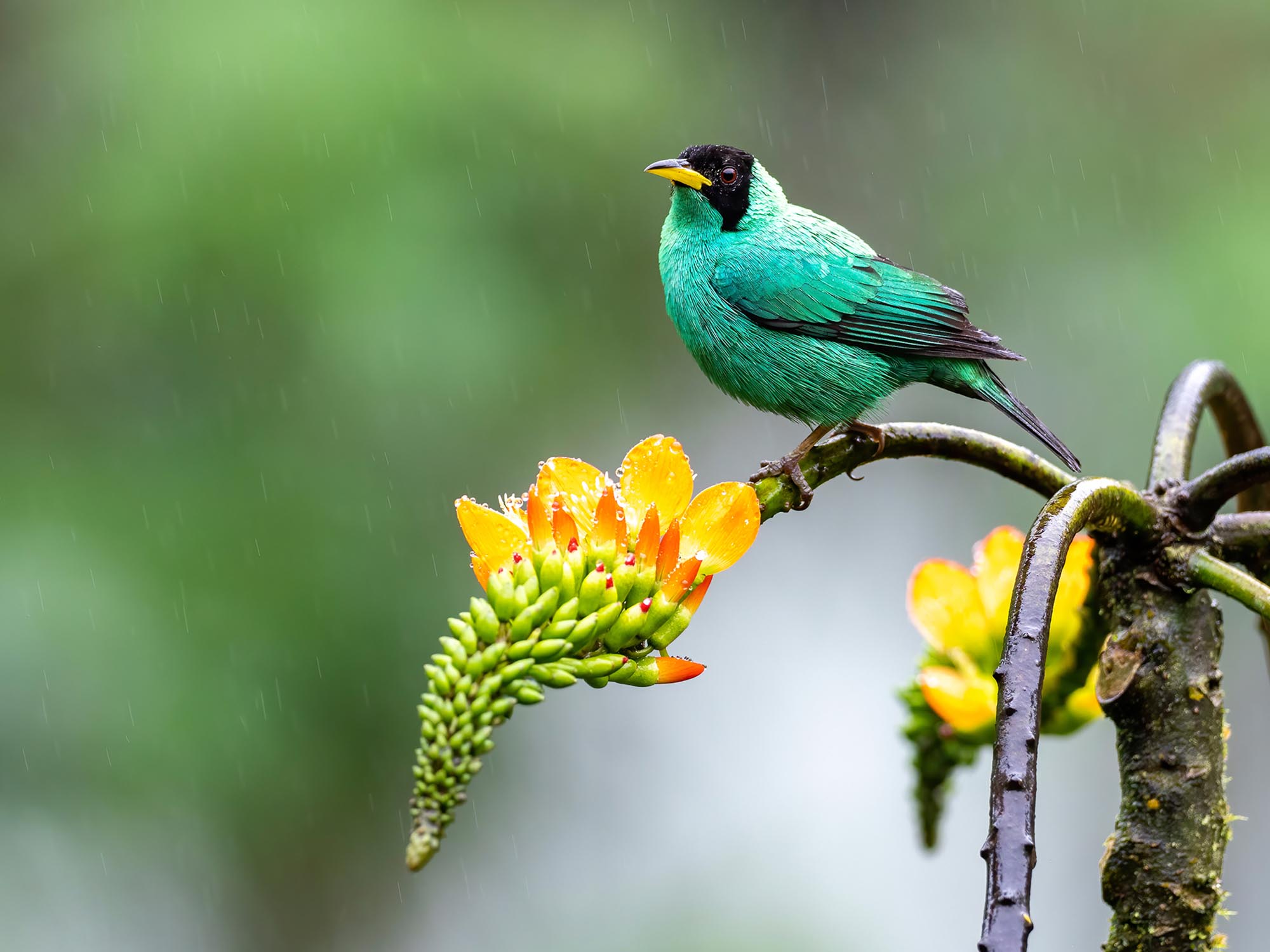
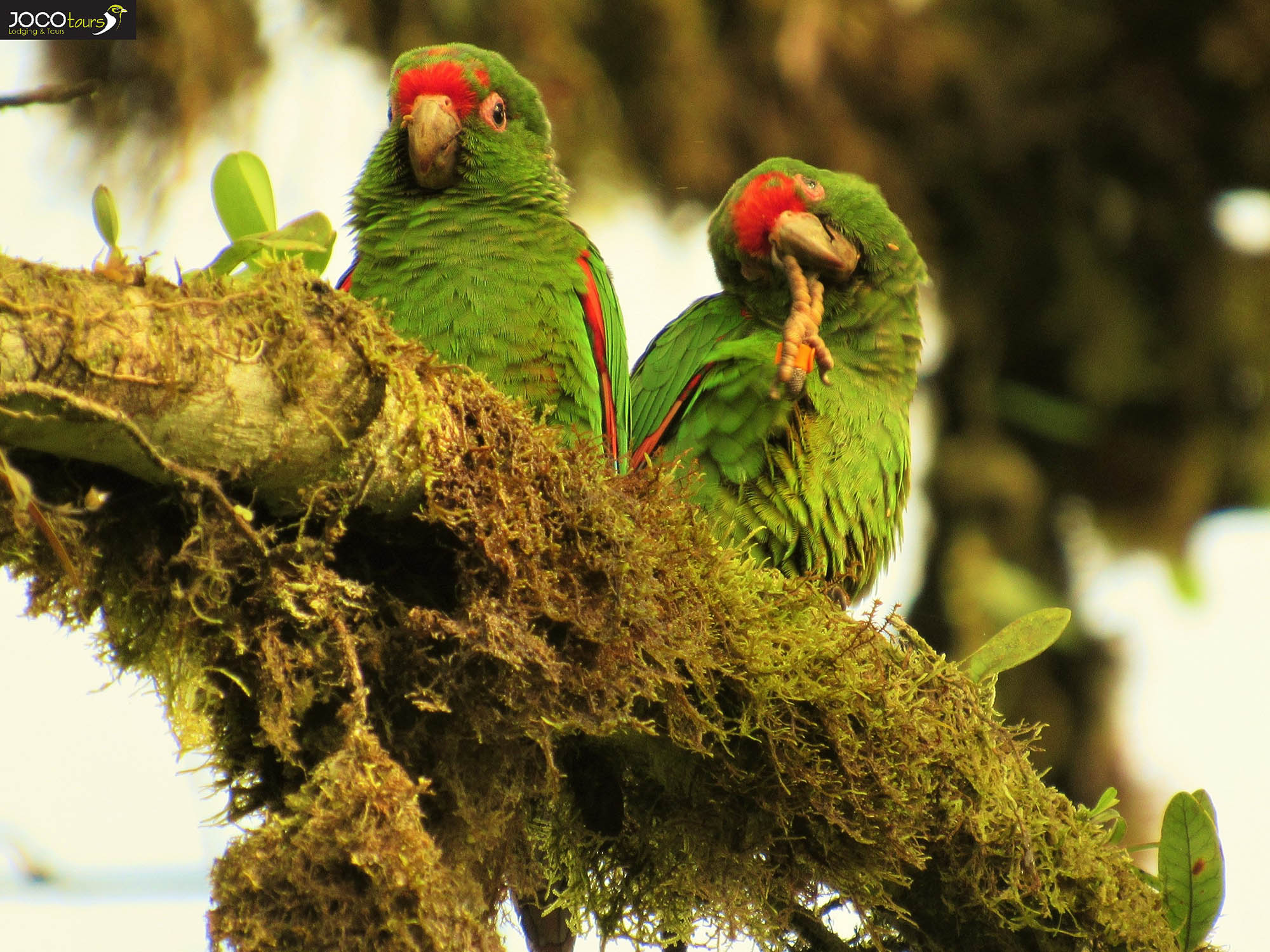
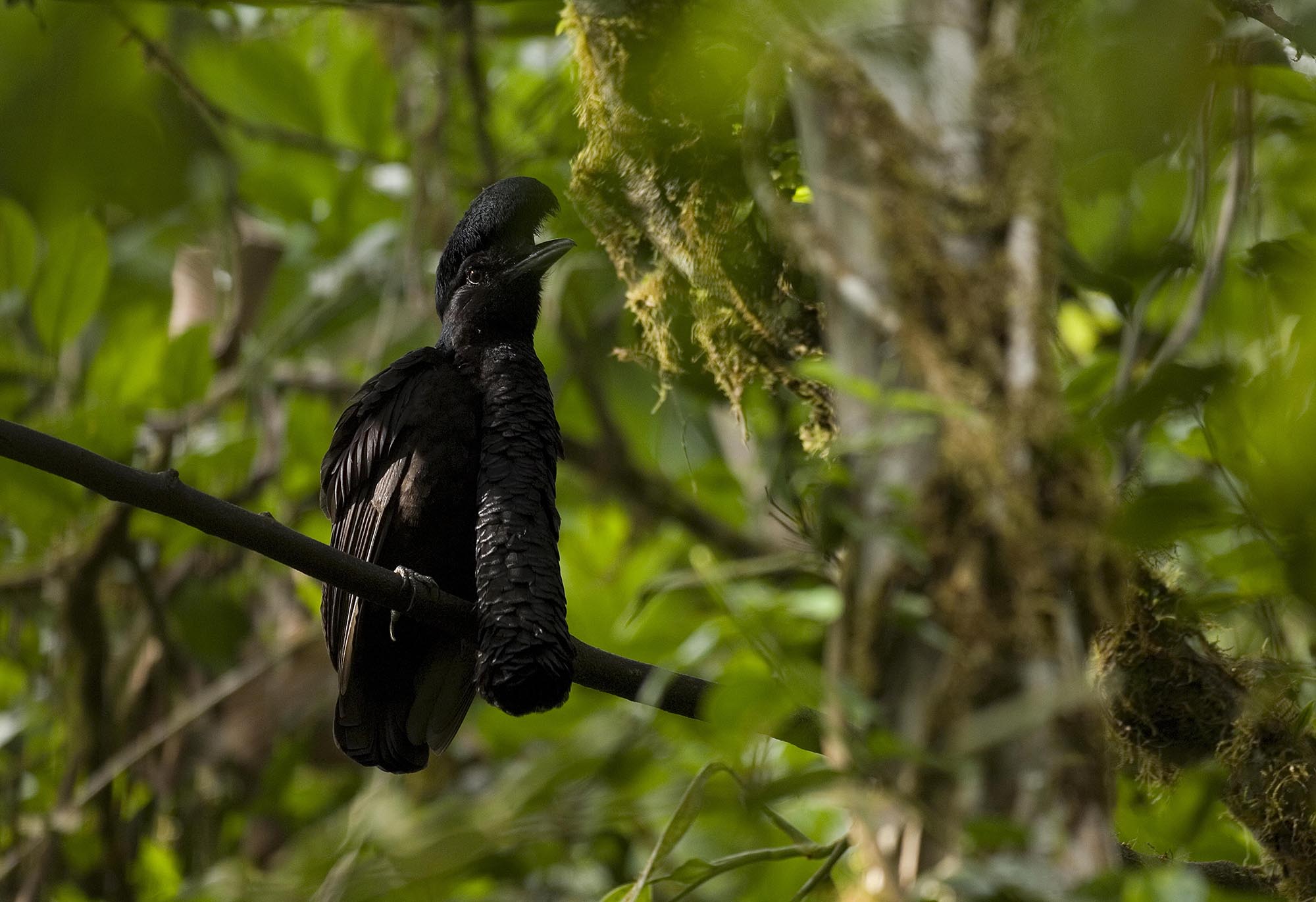
The reserve is home to over 411 bird species, including the El Oro Parakeet (Pyrrhura orcesi), Gray-cheeked Parakeet (Brotogeris pyrrhoptera), Pacific Royal Flycatcher (Onychorhynchus occidentalis), Gray-backed Hawk (Pseudastur occidentalis), Rufous-headed Chachalaca (Ortalis erythroptera), Chocó Toucan (Ramphastos brevis), Ecuadorian Tapaculo (Scytalopus robbinsi), and the Long-wattled Umbrellabird (Cephalopterus penduliger), which maintains a lek within the reserve. Several hummingbird species can be seen at the feeders, while the higher elevations serve as key habitat for endemic and threatened birds.
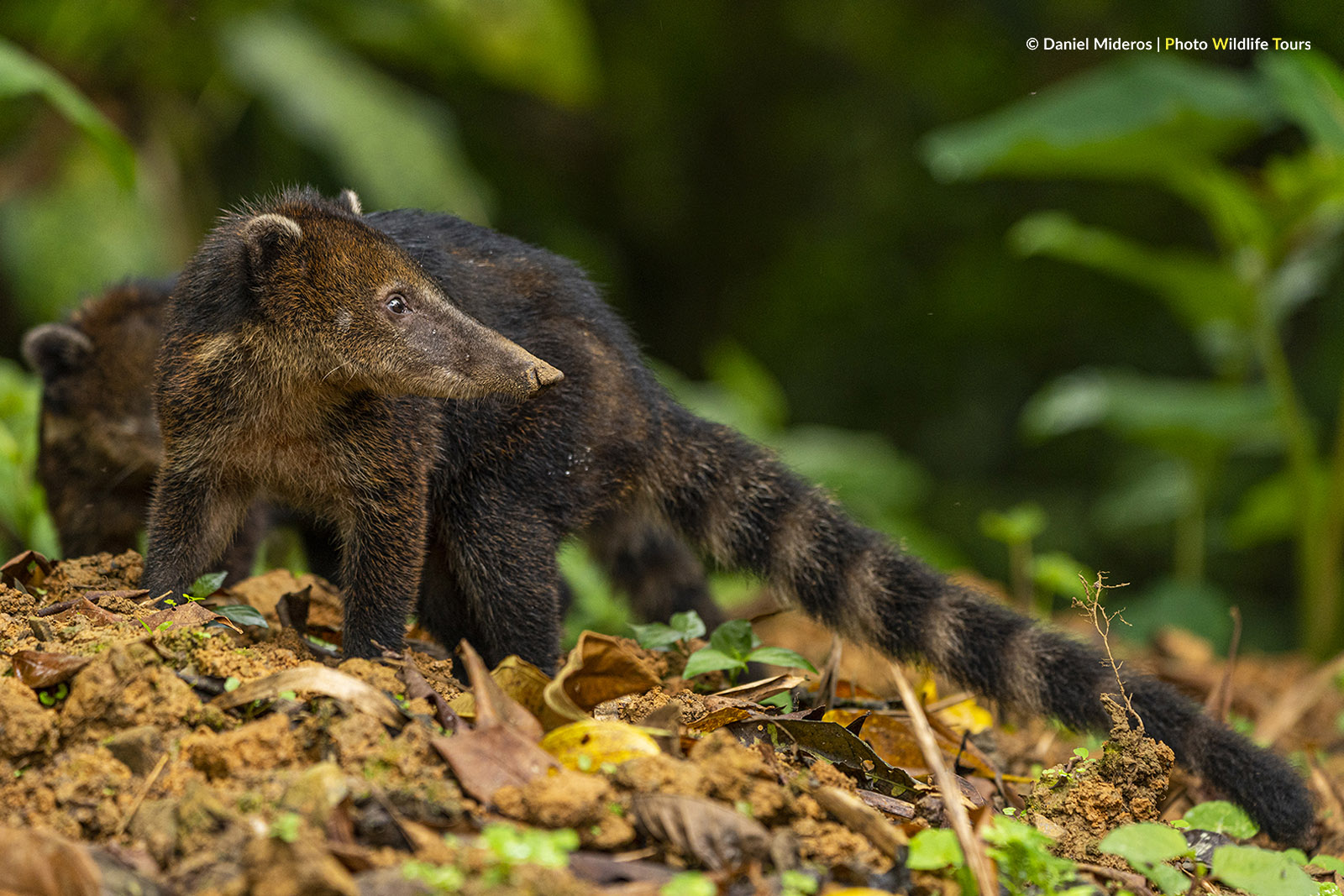
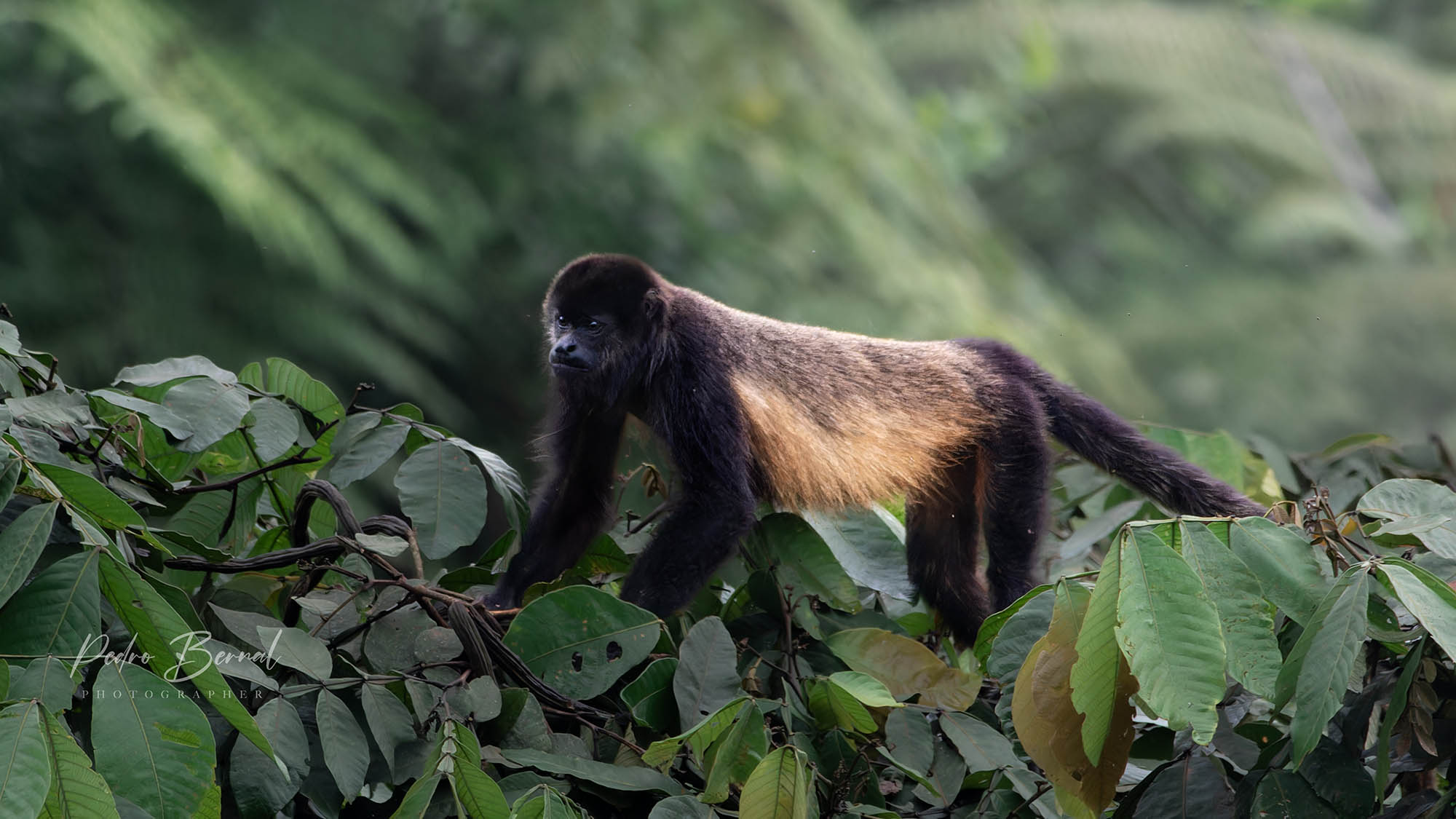
Among the mammals, notable species include the Ecuadorian White-fronted Capuchin (Cebus aequatorialis), reintroduced in 2010 after having gone extinct in Ecuador, the Mantled Howler Monkey (Alouatta palliata), the Hoffmann’s Two-toed Sloth (Choloepus hoffmanni), ocelot (Leopardus pardalis), and South American Coati (Nasua nasua).
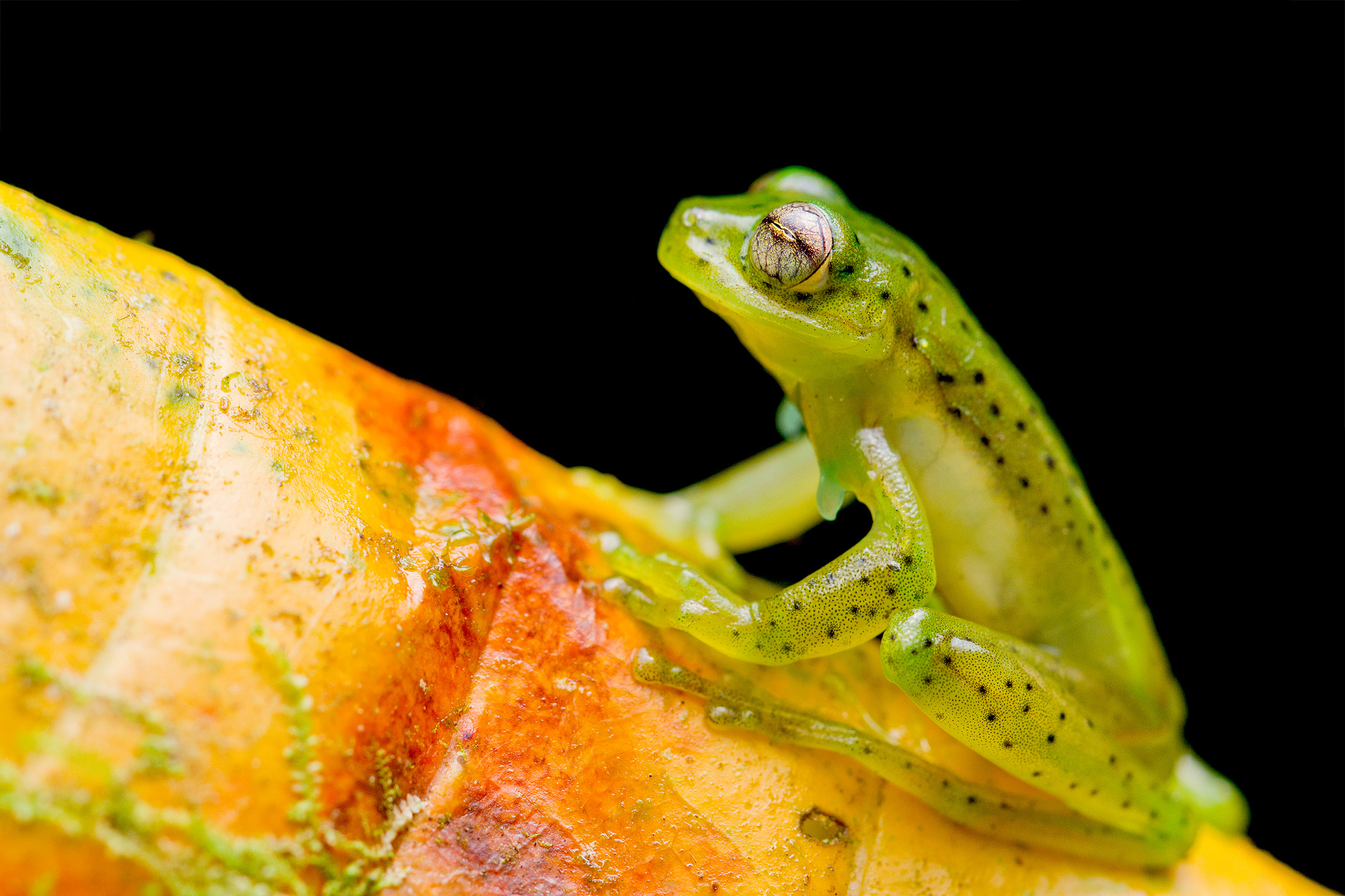
These animals find refuge in the cloud forests and reforested areas of the reserve, which are also home to a wide variety of amphibians, Morpho butterflies, and a newly described species of lizard.
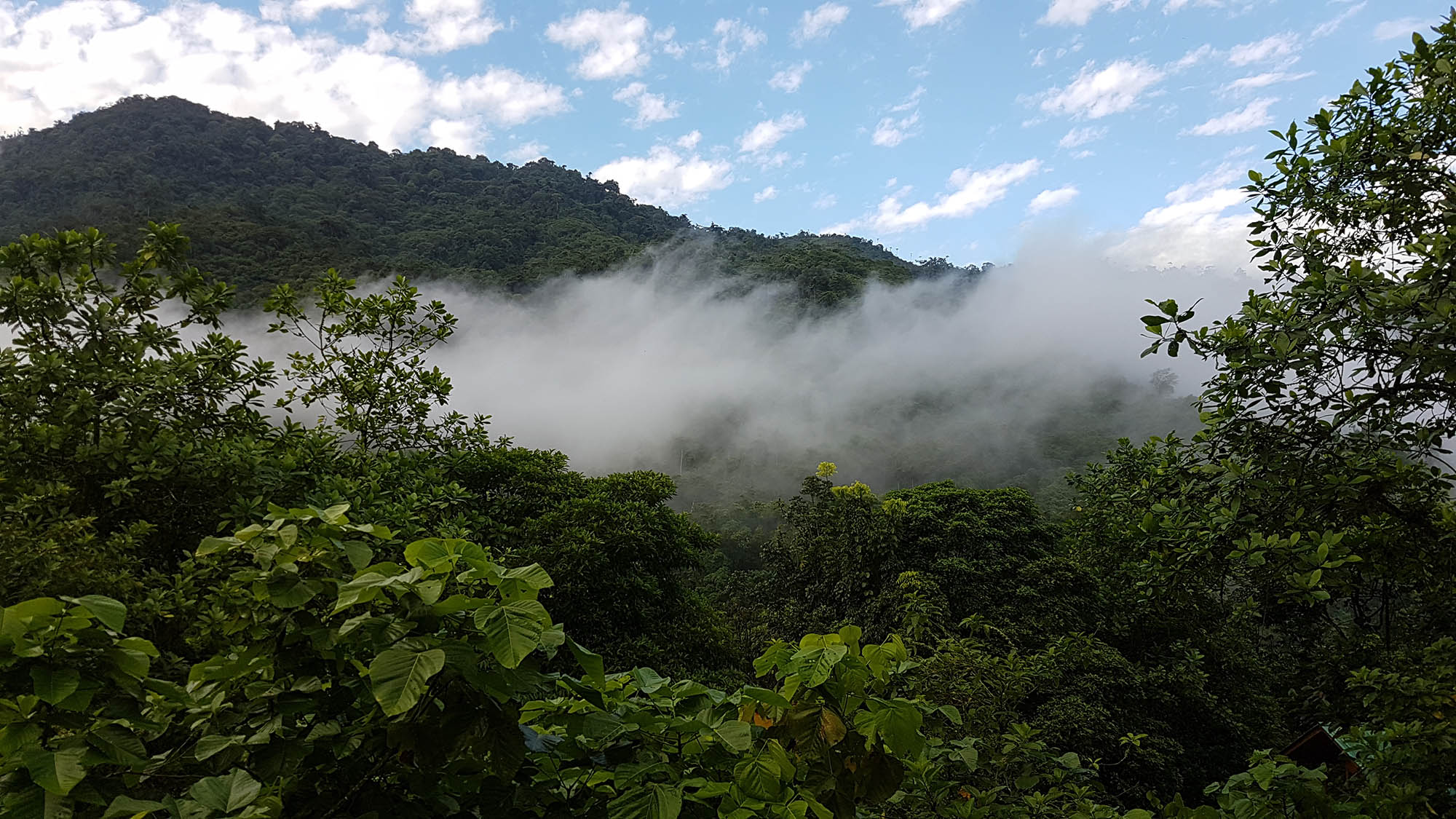
The flora includes cloud forest trees that support epiphytes such as orchids, heliconias, and Heliconia-like plants. One of the most notable species is Magnolia buenaventurensis, found only in this region. These ecosystems, once degraded by pastureland, have been regenerated thanks to our reforestation projects, which promote the recovery of native forest and natural regeneration, while also strengthening the El Oro Biological Corridor.
Other key initiatives carried out in the reserve include a nest box program to support the breeding of the El Oro Parakeet and the reintroduction of the Red-faced Parrot (Hapalopsittaca pyrrhops).